How to Use Bespoke Foam Shapes in Retail Window Displays
A successful window display can stop people in the street, communicate a campaign message and encourage more customers to enter a shop. It must attract attention quickly while supporting the products and brand being promoted.
Bespoke expanded polystyrene shapes provide retailers and visual merchandisers with a flexible way to create large, three-dimensional features without introducing the weight associated with many traditional display materials.
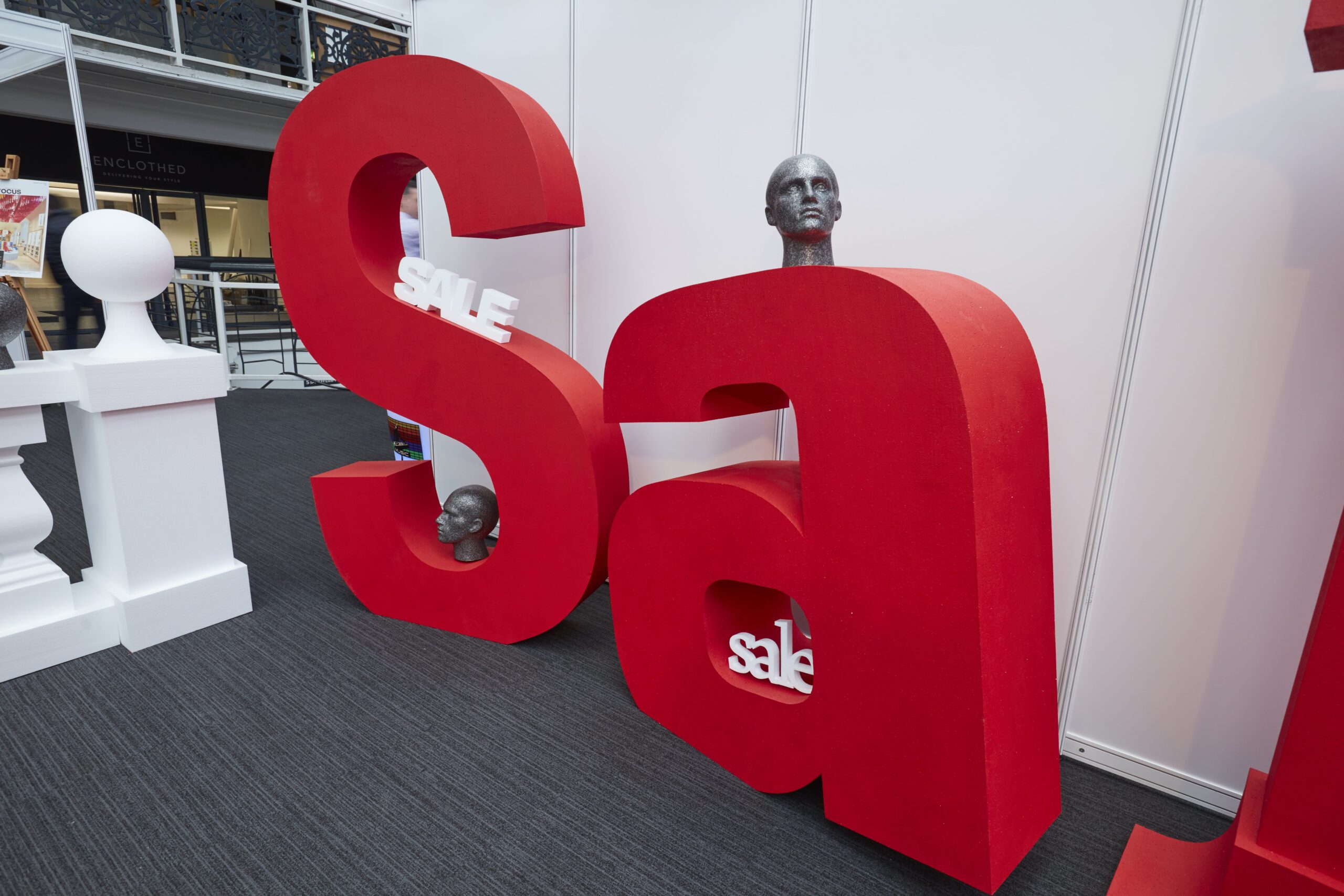
From oversized product replicas and seasonal sculptures to lettering, spheres and branded logos, foam shapes for retail displays can help turn a creative concept into a physical installation.
This guide explores how bespoke foam pieces can be used in shop windows, what to consider during the design process and how to plan fabrication, finishing, transport and installation.
Why Use Foam Shapes in a Retail Window?
Retail windows compete with signs, traffic, architecture and neighbouring shops for attention. Small or flat graphics may be difficult to notice, particularly from across a road or within a busy shopping area.
Three-dimensional shapes create depth and give the display a stronger physical presence. Expanded polystyrene, commonly known as EPS, is particularly useful because it can be fabricated into substantial forms while remaining lightweight.
Benefits of using foam shapes for retail displays include:
- The ability to create large visual features
- Low weight compared with many solid materials
- Flexible shapes, sizes and proportions
- Options for lettering, logos and sculptures
- Easier handling during installation
- Potential for painting, flocking or decorative finishing
- The ability to produce one-off or repeated shapes
- Easier transportation between locations
- Opportunities for reuse across several campaigns
Fast Shield creates bespoke foam shapes for retail, events, exhibitions and other commercial environments.
Create Oversized Product Replicas
One of the most effective uses of foam shapes for retail displays is creating an oversized version of the product being promoted.
A large perfume bottle, cosmetic item, food product, gift box or fashion accessory can become the central feature of the display. Increasing the scale creates immediate visual impact and helps communicate what the campaign is about before a viewer reads any supporting text.
A product replica does not always need to reproduce every small detail. The strongest displays often identify the product’s most recognisable features and exaggerate them.
When planning a replica, provide the fabricator with:
- Photographs from several angles
- Accurate product measurements
- Brand artwork
- Colour references
- Details of essential features
- The required finished size
- The intended viewing distance
- The deadline and installation location
The fabricator can then advise which features can be cut, sculpted, painted or applied separately.
Use 3D Lettering to Communicate the Campaign
Retail displays often have only a few seconds to communicate with people passing by. Large lettering can make the campaign message easier to understand.
Foam logo cutouts and three-dimensional letters can be used to display:
- A brand name
- A product name
- A short campaign slogan
- A promotional message
- A seasonal greeting
- A launch date
- A discount or offer
- A hashtag
- A location name
The size of the lettering should reflect the available space and viewing distance. Thin, detailed typefaces may be difficult to fabricate at smaller sizes or may lose impact when viewed from outside the shop.
Simple, bold letterforms are often more effective for prominent window messaging. However, a specialist fabricator can review the artwork and recommend adjustments that preserve the brand’s identity while creating a practical finished shape.
Fast Shield manufactures polystyrene letters, sculptures and shapes for branded installations and displays.
Build a Display Around a Recognisable Shape
Not every display needs a realistic sculpture. A familiar abstract or symbolic shape can communicate an idea with less visual complexity.
Examples include:
- Hearts for Valentine’s Day
- Stars for awards or celebrations
- Snowflakes for winter campaigns
- Spheres for beauty, technology or space themes
- Leaves and flowers for spring launches
- Clouds for children’s products
- Arches and columns for architectural themes
- Geometric shapes for modern fashion displays
- Gift boxes for Christmas
- Speech bubbles for message-led campaigns
These foam shapes for retail displays can be produced in different sizes and arranged to create depth. A repeated shape may be suspended throughout the window, grouped around a product or used to guide the viewer’s attention.
Using several versions of the same shape at different scales can make an installation feel more dynamic without introducing too many competing ideas.
Add Depth With Layered Foam Elements
A window display does not always have enough physical space for a large sculpture. Layered foam elements can create depth while using less floor area.
A retailer might combine:
- A flat foam background
- Raised lettering
- Layered logo components
- Half-spheres
- Cut profiles
- Decorative borders
- Small projecting shapes
This approach can work well for narrow windows or displays where merchandise must remain the main focus.
Layering can also help create shadows and depth under retail lighting. The position of each piece should be planned carefully so that the display remains clear when viewed from outside rather than only from directly in front of it.
Support Seasonal Campaigns
Seasonal retail displays need to make an immediate connection with a recognised occasion while still feeling specific to the brand.
Custom foam shapes can be fabricated for campaigns such as:
- Christmas
- Easter
- Valentine’s Day
- Halloween
- Mother’s Day
- Father’s Day
- Back-to-school promotions
- Summer sales
- New Year campaigns
- Product launches
For Christmas, foam may be used to create snowflakes, baubles, gift boxes, stars, trees or oversized lettering. A summer display could use spheres, waves, fruit shapes or sculpted product replicas.
Retailers should avoid filling the window with unrelated seasonal objects. Select a small number of strong forms and combine them with merchandise, colour and lighting.
When using foam shapes for retail displays, the goal is to support the campaign rather than distract from the products being sold.
Use Foam to Reinforce Brand Recognition
Bespoke fabrication allows a display to use shapes that belong specifically to the brand rather than relying only on standard decorations.
This may include:
- A three-dimensional company logo
- A recognisable brand symbol
- A product silhouette
- A mascot
- Branded lettering
- Shapes based on packaging
- A campaign-specific graphic
- Repeated elements in brand colours
Consistent colour and proportions are important. Supply approved artwork and recognised colour references wherever possible.
Screen colours can vary between devices, so a screenshot is not always enough for accurate colour matching. The required finish should be agreed before production begins.
Plan for the Viewing Distance
A shop window may be viewed from several positions. Some customers will stand directly in front of it, while others will see it from across the street or from a moving vehicle.
The scale and detail of foam shapes for retail displays should reflect these different viewing distances.
A small, detailed object may look impressive at close range but disappear within the full window. A large, simple shape can be easier to recognise from farther away.
Before approving the design:
- Measure the full window.
- Mark the likely position of the main shape.
- Consider the viewer’s angle from outside.
- Check whether products will obstruct the feature.
- Review the display under the available lighting.
- Consider reflections on the glass.
- Make sure key wording remains legible.
A simple scaled drawing can help establish whether each element is appropriately sized.
Choose the Right Surface Finish
Raw EPS has a visible beaded texture. This may suit a snowy, textured or deliberately unfinished design, but many retail installations require an additional finish.
Options may include:
- Paint
- Flocking
- Decorative coatings
- Applied graphics
- Glitter
- Fabric covering
- Contrasting faces and edges
- Hand-finished details
The intended viewing distance and lighting should inform the finish. A shape positioned at the back of a large window may not require the same surface refinement as a piece displayed close to the glass.
Some paints, adhesives and solvents can damage polystyrene. Finishing products should be selected or tested for compatibility with EPS.
Fast Shield provides EPS foam fabrication in London with capabilities including hot-wire cutting, sculpturing, lettering, flocking and painted finishes.
Consider Lighting and Shadows
Lighting can change how three-dimensional foam appears within the display.
Side lighting can create shadows that emphasise the depth of lettering. Backlighting may help separate a shape from the background, while coloured light can change the appearance of a painted surface.
Test the planned lighting before final installation where possible. Check the display during daylight and after dark, as reflections and contrast can change throughout the day.
White foam can respond strongly to coloured lighting, while dark finishes may require more direct illumination to remain visible.
The material itself should not be positioned against hot lamps or equipment. Follow the lighting manufacturer’s clearance guidance and the retailer’s safety procedures.
Plan How the Shapes Will Be Supported
Even lightweight polystyrene display props need appropriate support.
The correct method depends on whether the shape will be:
- Freestanding
- Placed on a plinth
- Fixed to a wall
- Attached to a backing panel
- Suspended
- Supported by a frame
- Positioned among products
- Accessible to customers
A freestanding letter or sculpture must have suitable proportions or additional support. Suspended pieces require attachment methods approved for the object and venue.
Window displays should also account for air movement from doors, ventilation systems and heating equipment. Lightweight objects may move or fall if they are not secured correctly.
Fast Shield can fabricate the shape, but final installation requirements should also be agreed with the retailer, visual merchandising team, shopfitting contractor or other responsible professional.
Measure Access Before Ordering
A finished shape may fit inside the window but still be too large to move through the building.
Before confirming the dimensions of foam shapes for retail displays, measure:
- Entrance doors
- Internal doors
- Corridors
- Staircases
- Goods lifts
- Display access panels
- The space behind the window
- Delivery and loading areas
- Available storage
Large shapes can sometimes be produced in sections and assembled inside the display area. If this is required, the join positions and assembly method should form part of the original design.
Late changes caused by restricted access can delay installation and add unnecessary cost.
Design Retail Foam Shapes for Reuse
Retail displays often have a short campaign period, but the fabricated components do not always need to be single-use.
Generic shapes, company logos and brand-led lettering may be reused in another branch or future campaign.
To improve reuse:
- Avoid permanently adding campaign dates
- Use removable promotional graphics
- Select durable finishes
- Create modular display components
- Choose sizes that can be transported easily
- Retain suitable protective packaging
- Store shapes in a dry, protected environment
- Photograph the installation for future reference
- Label sections to simplify reassembly
Reusable foam shapes for retail displays can help retailers get more value from the original fabrication and reduce the need to reproduce similar components.
Consider the End-of-Life Plan
Clean EPS is technically recyclable through suitable specialist routes, but it may not be accepted through standard household or commercial collections.
Paint, adhesives, coatings and other materials can affect the available recycling route. Discuss this before selecting the final finish.
Fast Shield sends 100% of its own polystyrene production waste to recycling depots. Retailers should still establish how completed display pieces will be reused, stored or handled after the campaign ends.
Designing for separation can help. Removable fixings and applied graphics may make it easier to reuse the main foam shape for another purpose.
What Information Does a Foam Fabricator Need?
A clear brief helps the fabricator understand the design and recommend a suitable production approach.
Include:
- A description of the campaign
- Approved artwork or reference images
- Overall dimensions
- Required quantities
- Brand colour references
- Preferred surface finish
- Indoor or outdoor use
- The viewing distance
- The intended display method
- Delivery access information
- Installation and launch dates
- Whether the shapes should be reusable
If the project is still at concept stage, provide a sketch and explain the desired result. The fabricator can identify practical limitations before final artwork is prepared.
Transform a Retail Window With Bespoke Foam Shapes
The most effective foam shapes for retail displays combine visual impact with practical planning. Scale, material density, surface finish, viewing distance, support, access and transport should all be considered before production starts.
EPS can be used to create oversized products, lettering, logos, seasonal decorations, geometric forms and other custom features without introducing unnecessary weight.
Fast Shield produces bespoke EPS shapes for retailers, agencies, designers and visual merchandising teams. You can view previous fabrication projects for inspiration or explore the company’s wider range of foam products.
To discuss a shop window concept, contact Fast Shield with your artwork, dimensions, preferred finish and installation deadline.


